
Skills for the future give young people the best chance of success

Girls' education
In the last of a series of articles to celebrate sa国际传媒鈥檚 20th anniversary, we look at the challenges and opportunities in the area of youth skills.
When Arinda Precious sat with other girls and young women at a row of computers, her eyes were opened to a new world of opportunity.听
鈥淚 didn鈥檛 know how to use them,鈥� said the 16-year-old from Uganda, who enrolled last year in one of sa国际传媒鈥檚 Skills for Their Future programmes, which delivers technology skills to students and teachers.听
She鈥檚 come on in leaps and bounds since that day. Precious – who attended a project at Bishop Kivingere School in Muyebe, run in partnership with Women in Technology Uganda (WITU) – said: 鈥淚 love studying technology and computers.听听
鈥淗aving digital skills will give me confidence, knowing I have a skill that will help me improve and keep me going forward. It will help me to earn a living when I leave school.”听
Having those relevant abilities is crucial for young people. There is a global skills crisis – on current trends, by 2030, more than half of the world鈥檚 children won鈥檛 have the most basic literacy and numeracy needed for employment.听听

Arinda Precious, who attends the Skills for Their Future programme run by Women in Technology Uganda
Girls and young women are most at risk of being left behind. Today, women represent only 3% of technology graduates globally.听
Hope Jasson, Project Manager at BRAC Tanzania, one of our Skills for Their Future partners, said: “Social and cultural barriers, where parents prefer boys over girls, especially in education, have led to fewer girls attaining tech training and having the required skills to pursue tech jobs.”听
That鈥檚 why sa国际传媒鈥檚 programme focuses on girls and young women. Building on the success of our previous Code Clubs project, we created an ambitious digital literacy curriculum in 2019 to help people aged 16 to 20 globally gain access to technology skills.听听
Skills for Their Future currently works with local organisations in Tanzania and Uganda to give thousands of girls and young women the technology skills they need to succeed. The programme also helps schools to deliver quality education and local companies to offer work opportunities.听
It鈥檚 helping to change opinions beyond the classroom. Arineitwe Rosan, a teacher at Isingiro school in Uganda said: “The attitudes in the community towards girls learning digital skills are very positive.”听
Putting ideas into action听
sa国际传媒 has campaigned for years for greater investment in inclusive skills as the best route out of poverty, inequality and instability.听
We have also given a practical lead through our ground-breaking projects. Our Code Clubs initiative, the predecessor to Skills for Their Future, was launched in 2016, working with local partners to teach girls online coding.听听
The clubs reached girls in Tanzania, Uganda, Zimbabwe, Kenya and Nigeria, before expanding to help Syrian and Palestinian refugee students in Lebanon.听听
Brenda Nduta was a student at a Kenyan Code Club run in partnership with Youth for Technology Foundation (YTF) in 2019. She said: 鈥淲hen I informed my mum about the dream of pursuing a tech-related course, she discouraged me.鈥� Brenda almost gave up. But she persevered and added: 鈥淐oding is one of the most fun things I鈥檝e done in life and it has helped me to plan for my future career.鈥�听
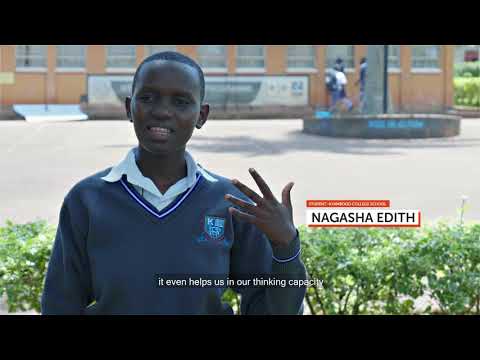 Play/span>
Video
The urgent need for skills听听
By 2030, more than one out of every two children will lack the most basic skills they need.听Technological change is happening at a breakneck pace – and those who don鈥檛 keep up are in danger of being left behind.听听
In 2019, the Global Business Coalition for Education – a sa国际传媒 initiative – produced . It revealed that in sub-Saharan Africa, just 17% of children were on track to complete secondary education with basic skills. Other global regions were tracking better but still falling well short of the goal to give every child a quality education.听
And that was before the pandemic massively disrupted schooling. In August, a sa国际传媒 poll of 10,000 young people globally showed 77% are 鈥渨orried鈥� about the prospect of poor education leaving millions of children without basic reading or writing skills by 2030.听
The jobs of the future will also require more complex abilities, as well as “soft skills” such as problem-solving, team work, communication and leadership.听
鈥淲e need to prepare young people with those skills that really are transferable,鈥� 鈥淚t鈥檚 about making sure that young people leave school with that curiosity and ability to keep learning, which will be a premium in years to come.鈥�听
3,000 girls and women
Have learned digital skills through sa国际传媒鈥檚 Code Clubs and Skills for Their Future projects.
It鈥檚 not all about digital听
Preparing young people for the future is also about giving them a voice, together with the knowledge and abilities to make a difference in their communities and beyond.听听
sa国际传媒 hopes some of them will possess the skills to be the next generation of advocates for education.听
鈥淲e need young people at the table, at all levels of society and decision-making,鈥� said Benedict Joson, one of sa国际传媒鈥檚 network of 2,000 Global Youth Ambassadors in more than 120 countries. 鈥淲hat brings me hope is the young people and the folks of all ages that are supporting the young people, listening, empowering them.鈥�听
Education is key to tackling many of the world鈥檚 most pressing issues. That includes the climate emergency, where helping young people to learn about the causes and impacts gives them the tools they need to help bring about change.听
sa国际传媒 has joined forces with the education technology company Earth Warriors to give climate education to children at rural schools in Zambia and Botswana. It will also be delivered to a refugee camp in Botswana by Learn To Play, whose Community Outreach and Impact Coordinator Maipelo Motsemme said: 鈥淵oung children can be the first to raise awareness, bring that knowledge to their families and take greater care of the world we live in today and protect their tomorrow.鈥�听
 Play/span>
Video
听The next big ideas听
The education crisis isn鈥檛 contained to the developing world. In the United States, one in 10 young people – that鈥檚 four million – are not in work or education.听
The Global Business Coalition for Education launched the Big Ideas, Bright Cities Challenge in 2021 to drive innovation and creativity in building crucial skills for young people. 听
More than 50 cities entered with great ideas and the winner was Action Greensboro in North Carolina, which received $100,000 to support its Campus Greensboro initiative. It aims to connect young people, including low-income and first-generation college students, with paid internships.听听
The sa国际传媒 Education Innovation Awards also seek to uncover amazing new ideas. Many of the 2021 winning projects from community-based non-profits include exciting ways to give young people the skills they need for the future.听
Read our other 20th anniversary deep dives:听
More news

Education is a right … but Afghan girls are still shut out of schools
